
Maheshwari sarees are a timeless symbol of heritage, tradition, and artistic craftsmanship in Indian textiles. Celebrated for their delicate texture and stunning patterns, these sarees have been admired for centuries. But what makes them truly exceptional? Let’s explore their rich history, cultural value, and lasting charm.
Origins of Maheshwari Sarees
Maheshwari sarees originated in the historic town of Maheshwar, located along the scenic banks of the Narmada River in Madhya Pradesh. Weaving in this region began as early as the 5th century, but the Maheshwari sarees we know today took shape during the 18th century under the guidance of Maharani Ahilyabai Holkar of the Holkar dynasty.
Maharani Ahilyabai Holkar’s Influence
Maharani Ahilyabai Holkar played a crucial role in nurturing the weaving tradition of Maheshwar. A patron of art and culture, she encouraged artisans to craft textiles that represented the beauty and spirit of her kingdom. She established weaving centers, supported artisans financially, and motivated them to innovate. She requested a fabric that would be lightweight yet durable enough for the region’s hot climate. This led to the creation of the Maheshwari saree, woven using a blend of fine silk and cotton — soft, breathable, elegant, and comfortable.
Distinctive Features
Maheshwari sarees are admired for their lightweight texture, intricate threadwork, and signature color combinations. They often showcase geometric patterns, floral elements, and traditional borders woven using plain or zari threads. One unique feature is the reversible border, where the pallu is woven in contrasting hues, creating a striking look when draped.
The blend of silk and cotton gives the fabric both sheen and comfort, making it suitable for long wear and warm climates.
Traditional Weaving Technique
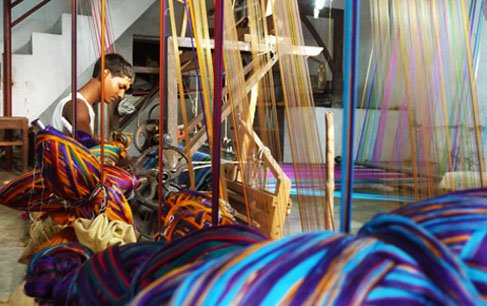
The weaving technique used in Maheshwari sarees involves detailed jaal patterns made on pit looms. Artisans use techniques such as twill and satin weaving to achieve fine, intricate designs. Classic motifs include stripes, checks, mango patterns, and peacock motifs. The weaving knowledge is carefully passed down through generations, preserving its heritage.
Blend of Tradition and Modern Style
Although rooted in ancient craft, Maheshwari sarees continue to evolve with modern design sensibilities. Contemporary designers experiment with new shades, patterns, and styling ideas while maintaining the traditional essence. Whether for weddings, festivities, or professional events, Maheshwari sarees now appeal to a wide global audience.
Revival and International Appreciation
There has been a strong movement to revive traditional handloom art, bringing Maheshwari sarees back into prominence. Many NGOs and handloom organizations support artisans with training and fair wages, ensuring that this craft survives and thrives. Today, Maheshwari sarees are seen on international runways and embraced by fashion influencers around the world.
Why Choose Maheshwari Sarees?
1. Timeless Elegance – A perfect blend of tradition, sophistication, and grace suitable for all occasions.
2. Supreme Comfort – Lightweight and breathable, ideal for long hours and hot climates.
3. Cultural Significance – A tribute to India’s rich heritage and skilled artisans.
4. Sustainable Fashion – Handloom production encourages slow, eco-friendly craftsmanship.
Conclusion
Maheshwari sarees are more than just attire — they are a celebration of India’s textile history and artistic excellence. From the legacy of Maharani Ahilyabai Holkar to their modern-day revival, these sarees continue to win hearts with their charm and craftsmanship. Owning a Maheshwari saree is like owning a piece of art that lives forever, passed down through generations.
In an era dominated by fast fashion, Maheshwari sarees stand as a reminder of handmade beauty, patience, and timeless creativity.

